Introduction
This page is an introduction into my ideas for a future projection of consumer habits for a brand, namely Zara.
Sustainability has been a huge movement in the fashion indsutry for a number of years, but since 2013 people really started to notice how many problems the fashion industry was causing environmentally. It can be argued that this movement is not anywhere close to slowing down, and is actually just picking up momentum. This is as a result of Generation Z, who have realised the problems caused by their parents and grandparents environmentally, socially, and economically must be changed. This has resulted in lots of changes worldwide, one being a huge surge in veganism as people aim to treat animals as "friends, not food". There is "a record 500,000 people, oh whom 125,000 were based in the UK, took the 2021 Veganuary pledge" (Oliver, 2021) Furthermore, with Greta Thunberg being an environmental activist since the age of 15 (2018), this has opened up the possiblity that anyone can protest for positive change.
It has been found that citizens across the world are concerned about the current state of our planet as a result of humans. This is a strong indecation that eco-conciousness is not going to decrease, as people are aiming to change the way we use our planet.
With this in mind, consumers are demanding brands to follow sustainable ideas and be environmentally concious with choices, such as materials, in their production. Futhermore, consumers have also been found to desire an increase in transparency with brands, due to controversies causing consumers to lose trust in their favourite brands. (from Forbes, 2021) It is evident that Zara in particular needs to be more open with the processes of production in their company, aswell as materials they use (and how much is bought vs wasted).
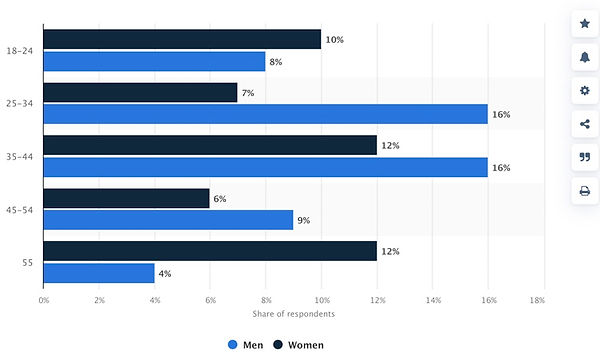
It has been found that consumers, namely the millennial male population in the UK (see figure one), would rather purchase from sustainable brands than any others.
Consumers seem to appreciate brands that are more sustainable and open about this, so this could positively impact Zara if they decide to take these recommendations on board. The brand would significantly grow in popularity from these changes, as consumers can easily share their changing thoughts on brands on social media apps. With haul culture, lots of brands rose to popularity in the orginal Covid-19 lockdown in March 2020. Zara could see a surge in profits if they also included some top influencers in their changes, as this can reach larger groups.